Uso del producto: Este producto está destinado exclusivamente a la investigación.
Toda la información de los productos de este sitio web tiene fines exclusivamente educativos. Cualquier forma de introducción en el cuerpo de personas o animales está estrictamente prohibida por la ley. Este producto solo debe ser manipulado por profesionales autorizados y cualificados. No es un medicamento, alimento ni cosmético y no debe etiquetarse, utilizarse ni presentarse como tal.
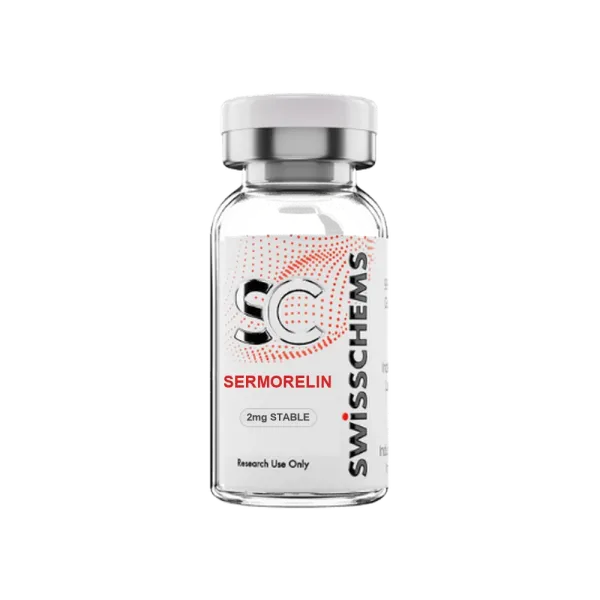
Sermorelin, 2mg
Durante el cambio de envase, puedes recibir productos con la etiqueta anterior o con la nueva. La formulación, la pureza y la calidad siguen siendo exactamente las mismas, según nuestros estándares.
- Tarjeta de crédito
- Transferencia bancaria (SEPA inmediata)
- Transferencia bancaria (ACH)
- Wise
- Revolut
- Zelle
- Remitly
- Western Union
- Chime
- Otros
-25% en todo – hasta el 31 de octubre
25% sobre los precios habituales, en sustitución de otras ofertas. Acumulable solo con el descuento crypto.
Envío en el día para pedidos en EE. UU. realizados antes de las 12:00 EST.
Ver la política de envíos →Devoluciones sin complicaciones en 30 días para productos sin abrir.
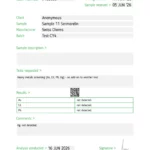
Ver la política de devoluciones →Cada lote se analiza para comprobar su pureza, potencia y calidad.
Ver resultados de laboratorio →Sermorelin (GRF 1–29) is a synthetic 29-amino-acid fragment of endogenous GHRH(1–44), representing the minimal active sequence required for full GHRHR agonist activity. GHRHR binding activates Gsα-coupled adenylyl cyclase, stimulating pulsatile GH release from anterior pituitary somatotrophs. Research applications include GHRHR pharmacology, somatotropic axis characterisation, and comparative GHRH analogue potency studies.
- High Purity – 99% Purity Guaranteed
- Independently Lab Tested
- Research Grade Quality
- For Laboratory Research Use Only
3D Molecular Structure
Drag to rotate · scroll to zoom| Chemical Formula | C151H250N44O44S |
|---|---|
| Synonyms | UNII-89243S03TE, 89243S03TE, Sermoreline, Sermorelinum, Growth Hormone Releasing Factor (GRF) (1-29) amide |
| Molar Mass | 3417.9 g/mol |
| CAS Number | 114466-38-5 |
| PubChem CID | 16132412 |
| Total Compound Content | 2 mg per vial |
| Shelf Life | 36 months |
Results refer to the tested sample. Check the batch and date in the report.
What is the relationship between Sermorelin and endogenous GHRH?
Sermorelin is a synthetic 29-amino-acid fragment of the first 29 residues of endogenous human GHRH(1–44). Studies established that GHRH(1–29) retains full GHRHR agonist potency relative to the intact 44-residue peptide, as the N-terminal region contains the receptor-binding and activation domain.
Sermorelin is therefore functionally equivalent to GHRH in terms of GHRHR pharmacology, though the shorter length confers a slightly shorter plasma half-life.
How does Sermorelin's half-life compare to other GHRH analogues used in research?
Sermorelin has a plasma half-life of approximately 10–20 minutes due to DPP-IV cleavage vulnerability. Tesamorelin (N-terminal trans-3-hexenoic acid modification) extends this to approximately 26–38 minutes. CJC-1295 without DAC (GRF 1–29) uses substitutions at positions 2, 8, 15, and 27 to provide DPP-IV resistance (t½ ~30 min), and CJC-1295 with DAC covalently binds albumin (t½ ~7–8 days).
Sermorelin's shorter half-life makes it appropriate for studies requiring discrete, acute GH pulse induction.
Why is Sermorelin considered a reference compound in GHRHR research?
Sermorelin possesses one of the most extensively characterized pharmacological profiles among GHRHR agonists, with well-documented receptor binding properties, signaling activity, and ligand-receptor interaction data.
Its defined structure, established receptor affinity, and thoroughly studied activation mechanisms have made it a widely used reference compound for investigations involving GHRHR pharmacology, receptor activation kinetics, structure-activity relationships, and comparative analyses of GHRH analogues.
As a result, Sermorelin is frequently utilized as a benchmark molecule in studies examining receptor signaling, ligand optimization, and GHRHR-mediated signal transduction.