Utilisation : Ce produit est destiné uniquement à la recherche.
Toutes les informations sur les produits présentes sur ce site sont fournies à titre éducatif uniquement. Toute forme d’introduction dans le corps humain ou animal est strictement interdite par la loi. Ce produit doit être manipulé uniquement par des professionnels agréés et qualifiés. Il ne s’agit pas d’un médicament, d’un aliment ou d’un cosmétique et il ne doit pas être présenté, utilisé ou étiqueté comme tel.
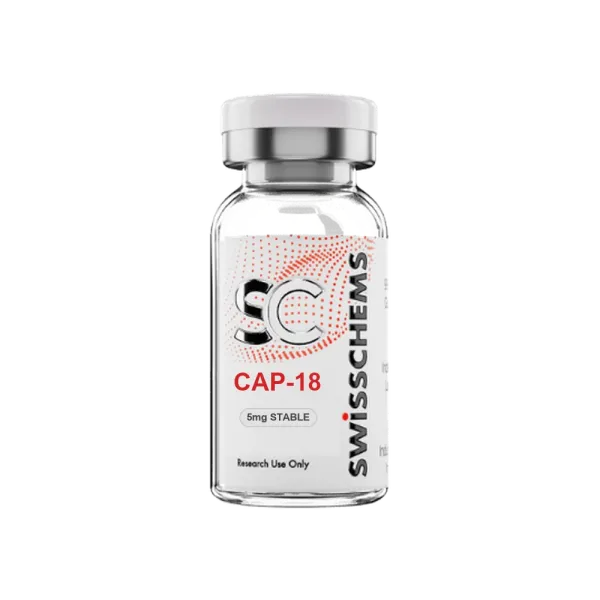
LL-37 (CAP-18) 5mg
Pendant notre changement d’emballage, vous pouvez recevoir des produits avec l’ancienne ou la nouvelle étiquette. La formulation, la pureté et la qualité restent exactement les mêmes, selon nos standards.
- Carte de crédit
- Virement bancaire (SEPA instantané)
- Virement bancaire (ACH)
- Wise
- Revolut
- Zelle
- Remitly
- Western Union
- Chime
- Autres
-25% sur tout – jusqu’au 31 octobre
25% sur les prix habituels, en remplacement des autres soldes. Cumulable uniquement avec la remise crypto.
Expédition le jour même pour les commandes aux États-Unis passées avant 12 h EST.
Voir la politique de livraison →Chaque lot est testé pour sa pureté, sa puissance et sa qualité.
Voir les résultats d’analyse →LL-37 (CAP-18) is the active C-terminal peptide derived from human cathelicidin, the sole cathelicidin-family antimicrobial peptide encoded in the human genome. Research interest centers on its dual function as both a direct membrane-disrupting antimicrobial agent and an immunomodulatory signalling molecule engaging multiple receptor pathways.
Research applications include innate immune signalling studies, antimicrobial peptide membrane-interaction research, and formyl peptide receptor (FPR2) pathway investigation.
- High Purity – 99% Purity Guaranteed
- Independently Lab Tested
- Research Grade Quality
- For Laboratory Research Use Only
3D Molecular Structure
Drag to rotate · scroll to zoom| Chemical Formula | C205H340N60O53 |
|---|---|
| Synonyms | Cathelicidin, ropocamptide, Bac4, Cathelicidin antimicrobial peptide 18 |
| Molar Mass | 4493 g/mol |
| CAS Number | 154947 |
| PubChem CID | 16198951 |
| Total Compound Content | 5mg (1 vial) |
| Shelf Life | 36 months |
Every batch is independently lab tested for identity, purity and potency. View our lab testing program →
What is the proposed dual mechanism of LL-37's antimicrobial and immunomodulatory activity?
LL-37's antimicrobial mechanism involves direct insertion into and disruption of bacterial cell membranes via its amphipathic alpha-helical structure, a mechanism studied using model lipid bilayer and liposome leakage assays.
Separately, LL-37 engages host cell surface receptors — including FPR2, P2X7, and EGFR transactivation pathways — to modulate immune cell chemotaxis, cytokine release, and cell migration, representing a receptor-mediated signalling mechanism distinct from its direct membrane-disrupting antimicrobial action.
Research distinguishing these two activities typically uses peptide fragments or receptor antagonists to isolate which mechanism drives a given experimental endpoint.
What cell-based assays are used to study LL-37's chemotactic and immunomodulatory effects?
Standard approaches include transwell migration assays to quantify LL-37-induced chemotaxis of neutrophils, monocytes, or mast cells, alongside cytokine/chemokine release assays (ELISA, multiplex) following LL-37 exposure in immune cell culture models. FPR2-specific signalling is often confirmed using selective FPR2 antagonists or receptor-knockdown approaches to establish receptor dependence of the observed chemotactic or signalling response.
How is LL-37's membrane-disrupting antimicrobial mechanism studied using biophysical methods?
Model lipid bilayer systems — including liposome dye-leakage assays, planar lipid bilayer electrophysiology, and circular dichroism spectroscopy to monitor peptide secondary structure upon membrane association — are standard biophysical methods for characterising LL-37's membrane interaction and permeabilisation kinetics. These methods allow researchers to correlate peptide concentration, lipid composition (mimicking bacterial versus mammalian membranes), and resulting membrane disruption, providing mechanistic insight into the peptide's selectivity for bacterial over host cell membranes.