Uso del prodotto: Questo prodotto è destinato esclusivamente alla ricerca.
Tutte le informazioni sui prodotti presenti su questo sito hanno scopo esclusivamente educativo. Qualsiasi forma di introduzione nel corpo di esseri umani o animali è severamente vietata dalla legge. Questo prodotto deve essere maneggiato solo da professionisti abilitati e qualificati. Non è un farmaco, un alimento o un cosmetico e non deve essere etichettato, utilizzato o presentato come tale.
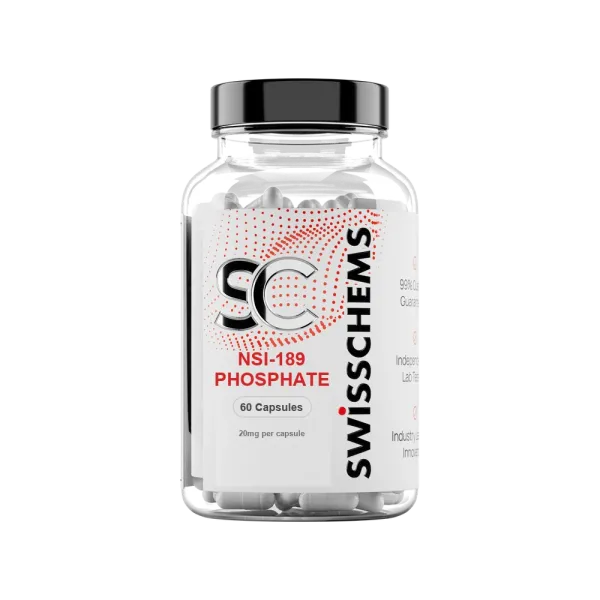
NSI-189 Phosphate (20mg/capsule), 60 Capsules
Durante il cambio di confezione potresti ricevere prodotti con l’etichetta precedente o con quella nuova. Formulazione, purezza e qualità restano esattamente le stesse, secondo i nostri standard.
- Carta di credito
- Bonifico bancario (SEPA istantaneo)
- Bonifico bancario (ACH)
- Wise
- Revolut
- Zelle
- Remitly
- Western Union
- Chime
- Altri metodi
-25% su tutto – fino al 31 Ottobre
25% sui prezzi ordinari, in sostituzione degli altri saldi. Cumulabile solo con lo sconto crypto.
Spedizione in giornata per gli ordini USA effettuati entro le 12:00 EST.
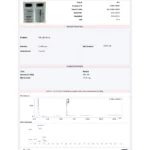
Vedi le condizioni di spedizione →Ogni lotto è testato per purezza, potenza e qualità.
Vedi i risultati di laboratorio →NSI-189 phosphate is a synthetic benzylpiperazine-aminopyridine derivative investigated for its effects on neural progenitor cell biology and hippocampal neurogenesis pathways.
Unlike compounds that primarily modulate monoamine transporters or neurotransmitter receptors, NSI-189 has been studied for its reported ability to promote proliferation, differentiation, and survival of neural progenitor cells in experimental models.
Research has focused on its effects on hippocampal cell populations, neurogenic signalling pathways, neuronal maturation processes, and structural plasticity mechanisms.
Experimental applications include neural progenitor proliferation assays, neurogenesis pathway investigations, cell differentiation studies, hippocampal tissue modelling, and structure-activity relationship (SAR) research within the benzylpiperazine-aminopyridine compound class.
- High Purity – 99% Purity Guaranteed
- Independently Lab Tested
- Research Grade Quality
- For Laboratory Research Use Only
3D Molecular Structure
Drag to rotate · scroll to zoom| Chemical Formula | C22H33N4O5P |
|---|---|
| Synonyms | NSI-189 phosphate 1270138-41-4, UNII-HX0VO60T62, HX0VO60T62, NSI189 Phosphate |
| Molar Mass | 464.5 g/mol |
| CAS Number | 1270138-41-4 |
| PubChem CID | 50922680 |
| Total Compound Content | 1200mg (20mg per capsule) |
| Shelf Life | 36 months |
Results refer to the tested sample. Check the batch and date in the report.
What cell-based assays are used to characterize NSI-189 phosphate's effects on neural progenitor cells?
Common experimental approaches include in vitro proliferation assays using neural progenitor cell cultures, with proliferation quantified through markers such as BrdU incorporation or Ki-67 expression. Differentiation studies often monitor changes in neuronal lineage markers, including doublecortin (DCX) and NeuN, over extended culture periods.
Concentration-response experiments are frequently performed to characterize proliferative activity and compare responses across different experimental conditions.
How is neurogenesis quantified in experimental NSI-189 studies?
Neurogenesis research typically utilizes immunohistochemical analysis of proliferation markers such as Ki-67 and BrdU, together with immature neuronal markers including doublecortin (DCX). Quantification is commonly performed through stereological cell counting, image-based analysis, and biomarker expression profiling.
Additional assessments may include volumetric imaging and histological measurements to evaluate structural changes associated with prolonged experimental exposure.
What distinguishes NSI-189 phosphate from compounds acting through monoaminergic pathways?
NSI-189 phosphate is investigated primarily for its reported effects on progenitor-cell proliferation and neurogenesis-associated signalling pathways rather than direct interaction with monoamine transporters or neurotransmitter receptors.
Mechanistic studies often employ receptor antagonists or pathway-specific inhibitors to determine whether observed cellular effects persist independently of monoaminergic signalling. This approach helps distinguish progenitor-cell-directed activity from secondary effects associated with neurotransmitter-dependent mechanisms.