Uso del prodotto: Questo prodotto è destinato esclusivamente alla ricerca.
Tutte le informazioni sui prodotti presenti su questo sito hanno scopo esclusivamente educativo. Qualsiasi forma di introduzione nel corpo di esseri umani o animali è severamente vietata dalla legge. Questo prodotto deve essere maneggiato solo da professionisti abilitati e qualificati. Non è un farmaco, un alimento o un cosmetico e non deve essere etichettato, utilizzato o presentato come tale.
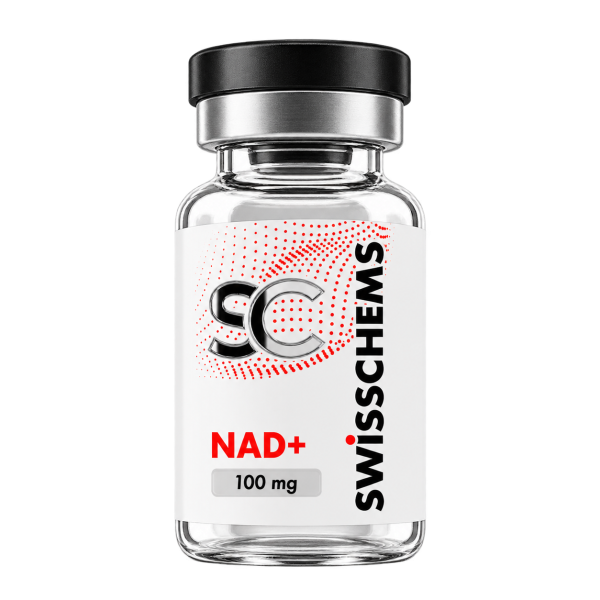
NAD+ (Nicotinamide Adenine Dinucleotide) 100 mg
Durante il cambio di confezione potresti ricevere prodotti con l’etichetta precedente o con quella nuova. Formulazione, purezza e qualità restano esattamente le stesse, secondo i nostri standard.
- Carta di credito
- Bonifico bancario (SEPA istantaneo)
- Bonifico bancario (ACH)
- Wise
- Revolut
- Zelle
- Remitly
- Western Union
- Chime
- Altri metodi
-25% su tutto – fino al 31 Ottobre
25% sui prezzi ordinari, in sostituzione degli altri saldi. Cumulabile solo con lo sconto crypto.
Spedizione in giornata per gli ordini USA effettuati entro le 12:00 EST.
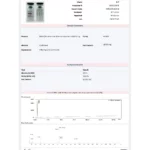
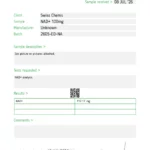
Vedi le condizioni di spedizione →Ogni lotto è testato per purezza, potenza e qualità.
Vedi i risultati di laboratorio →NAD+ (Nicotinamide Adenine Dinucleotide) is a crucial coenzyme involved in oxidation-reduction (redox) reactions, serving as an electron carrier in cellular bioenergetics. It plays a fundamental role in metabolic pathways, including glycolysis, the citric acid cycle, and oxidative phosphorylation.
This pyridine nucleotide exists in both oxidized (NAD⁺) and reduced (NADH) states, enabling its function in enzymatic catalysis and cofactor-dependent biochemical reactions. NAD+ is metabolized through enzymatic cleavage, salvage pathways, and poly(ADP-ribose) polymerase (PARP) activity, with primary clearance via renal and hepatic pathways.
NAD+ 100 mg should be reconstituted with bacteriostatic water (BAC).
- High Purity – 99% Purity Guaranteed
- Independently Lab Tested
- Research Grade Quality
- For Laboratory Research Use Only
3D Molecular Structure
Drag to rotate · scroll to zoom| Chemical Formula | C21H27N7O14P2 |
|---|---|
| Synonyms | nadide, coenzyme I, beta-NAD, beta-nicotinamide adenine dinucleotide |
| Molar Mass | 663.43 g/mol |
| CAS Number | 53-84-9 |
| PubChem CID | 5892 |
| Total Compound Content | 100 mg per vial |
| Shelf Life | 24 months |
Results refer to the tested sample. Check the batch and date in the report.
How does NAD+ differ from NAD+ precursor compounds in biochemical research?
NAD+ is the oxidized dinucleotide cofactor itself, whereas compounds such as nicotinamide mononucleotide (NMN) and nicotinamide riboside (NR) participate in NAD+ biosynthetic pathways. This distinction makes NAD+ a useful research tool for investigating NAD+-dependent enzymatic reactions, cofactor utilization mechanisms, redox system dynamics, and the biochemical relationships between NAD+ and precursor-associated pathways.
Which enzyme families utilize NAD+ as a substrate?
NAD+ serves as an obligate substrate for three major enzyme families: poly(ADP-ribose) polymerases (PARPs), sirtuins (SIRT1–7), and CD38/CD157 ADP-ribosyl cyclases. These enzymes utilize NAD+ in processes involving protein modification, enzymatic regulation, signal transduction, and cofactor-dependent biochemical activity.
Their dependence on NAD+ has made them important targets for investigations of enzyme-cofactor interactions and NAD+-associated regulatory mechanisms.
Why is NAD+ widely used in biochemical research?
NAD+ occupies a central role in both redox chemistry and enzyme-mediated regulatory systems. In addition to functioning as a reversible electron carrier, it participates directly in the catalytic activity of multiple NAD+-dependent enzyme families.
These characteristics have established NAD+ as a valuable research tool for investigating redox biology, enzyme kinetics, cofactor-dependent catalysis, sirtuin pharmacology, PARP biochemistry, CD38-associated pathways, and the molecular mechanisms governing NAD+-dependent biochemical processes.